0
.
.
.
.
.
.
Stars qty display:
Max stars: 20
People have always looked up at the sky, searching for an answer to the question: “What’s out there?” In 1961, Yuri Gagarin broke through Earth’s gravitational barrier, ushering in the era of manned spaceflight. Eight years later, on the Apollo 11 mission, Neil Armstrong and Buzz Aldrin left the first human footprint on the Moon. Those moments forever changed our perspective—we ceased to be mere observers of space, and became explorers.
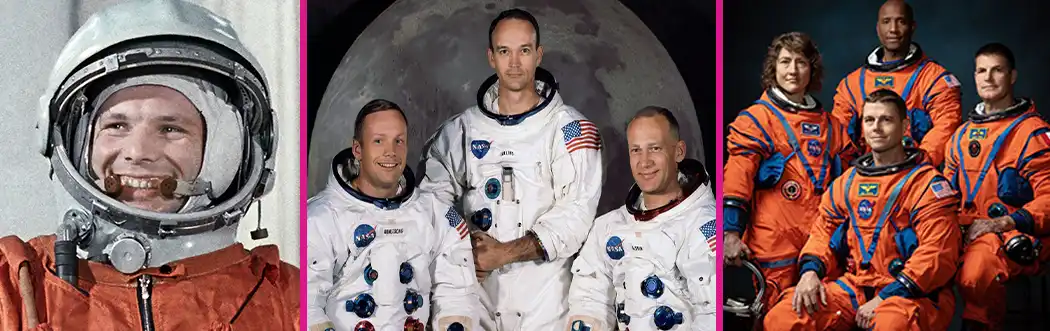
Today, thanks to the Artemis program, we are returning to the Moon. Not just to visit it, but to make it a stepping stone on the path ahead. The Artemis II mission is not an end in itself—it’s a stepping stone. It’s proof that we can once again build bridges between worlds and prepare for what lies beyond Earth’s horizon.
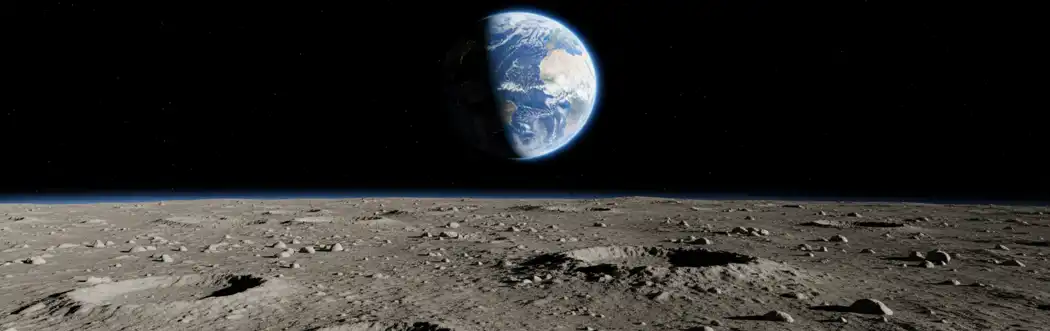
But the Moon is just the beginning. The person who lands on its surface today will, in a few decades, venture into deep space to explore distant star systems. Our astronaut is already there—aboard a ship traversing the darkness between galaxies. An unexplored ocean of stars stretches out before him, and his task is to chart a safe flight path. And this is where you come in.
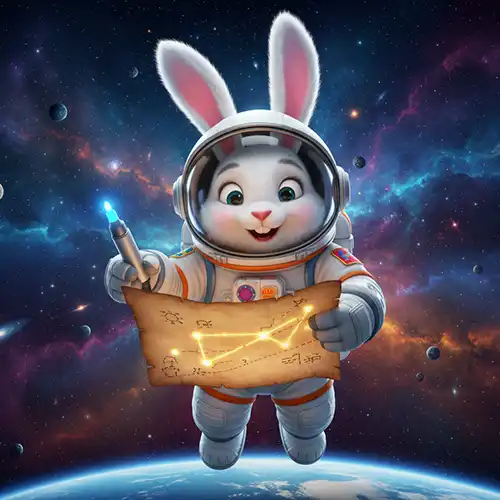 Your task is to connect stars to create a map of interstellar routes.
Remember the fundamental rule of our cosmic game: we always fly to the nearest, unvisited destination. Although the human eye can be a perfect tool, in space it can play tricks on you—distances appear identical, and neighboring points may be farther away than they seem. That’s why you shouldn’t rely solely on intuition. Use the ruler, which displays the exact distance to each destination. In space, precision is a matter of survival.
Today, it’s just a game. A simulation on a screen, a way to train your observation skills and logical thinking. But who knows? Perhaps someone who practices charting courses among virtual stars today will sit at the controls of a real interstellar ship tomorrow. And then, the habit of relying on instruments, patience, and accurate distance estimation will no longer be just part of the fun—they will become your greatest asset.
„It’s not how fast you go that matters, but how clearly you know where you’re going."